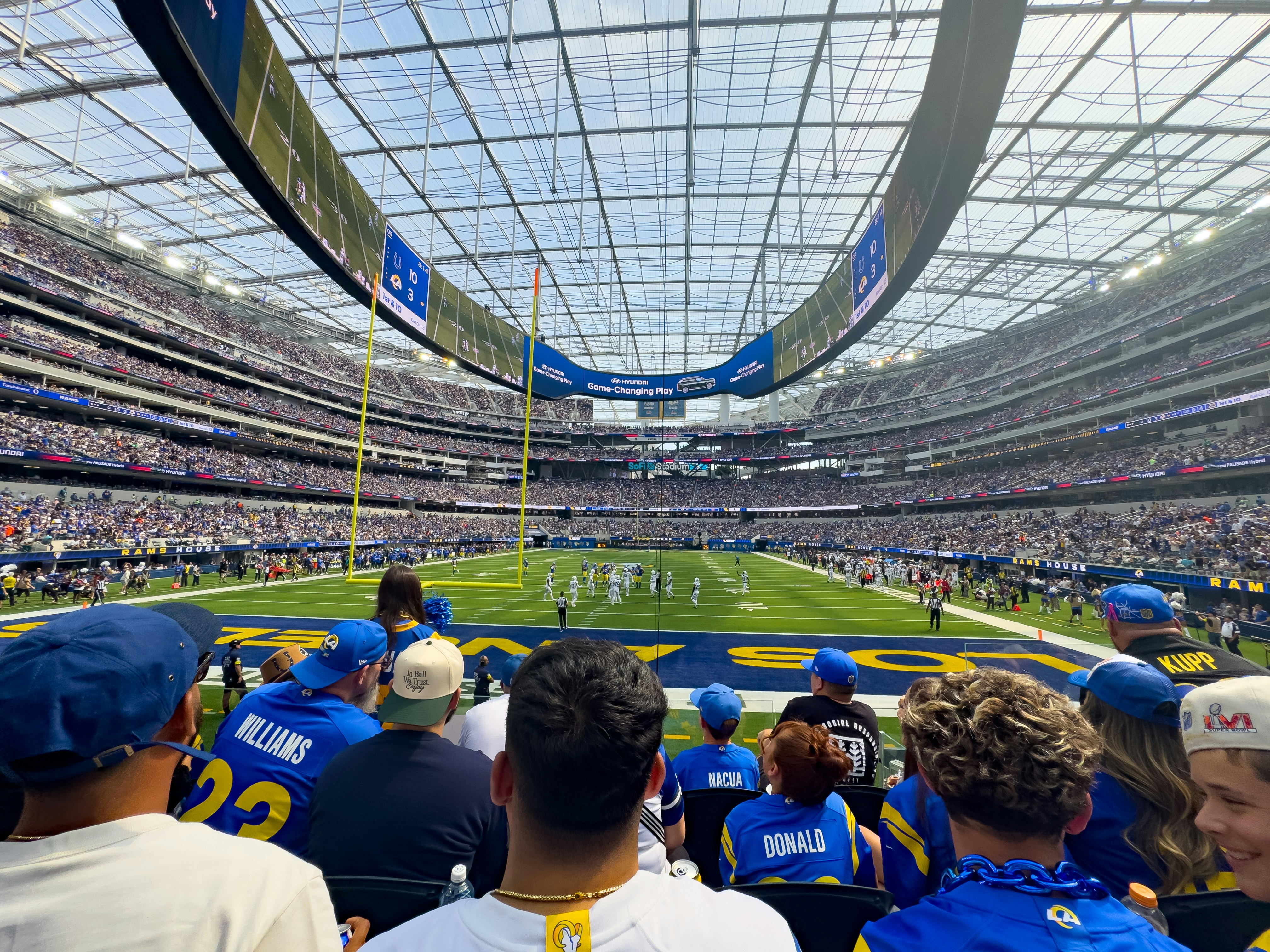
Super Bowl LXI in Inglewood: A Lead-Follow-Up Plan for Local Service Businesses
Super Bowl LXI is scheduled for SoFi Stadium in Inglewood in 2027, with Jay-Z announced as the halftime performer. The announcement has created significant public interest and gives nearby service businesses time to prepare their inquiry process well before the event approaches. NFL · The New York Times
That does not prove that every Inglewood business will see more leads or bookings. No supplied source documents a measured increase in local service-business inquiries. But a major event can create conditions where local operators may receive more questions, quote requests, scheduling requests, or advance booking inquiries.
The useful move is not to promise availability too early or build a complicated event campaign. It is to prepare a simple process so a possible increase in inquiries does not overwhelm your normal work.
This guide covers how Inglewood and nearby service businesses can prepare to respond, qualify requests, protect capacity, and follow up consistently around a major event.
Table of contents
- Start with the services that may be affected
- Build an event-specific intake process
- Separate urgent work from future bookings
- Set availability rules before inquiries arrive
- Create an acknowledgment and follow-up workflow
- Use practical message templates
- Keep automation in the right role
- Review the plan as event details develop
- Key takeaways
- FAQ
Start with the services that may be affected
A stadium event does not create the same opportunity for every business. Before changing your lead process, identify the services that could plausibly receive event-related interest.
Examples may include:
- Cleaning companies handling pre-event, post-event, short-term rental, or commercial cleaning requests
- Transportation providers receiving advance ride or shuttle inquiries
- Security and event-support providers receiving staffing questions
- Contractors, electricians, plumbers, HVAC businesses, and locksmiths receiving property-related service requests from hosts, venues, or businesses preparing for visitors
- Property maintenance businesses supporting rental properties or commercial locations
- Auto glass, towing, roadside, or repair businesses handling vehicle-related inquiries
- Caterers, photographers, rental providers, and other event-support operators receiving booking requests
The point is not to assume demand will arrive. The point is to identify where demand could show up and decide how your business should respond.
Ask three practical questions
For each service you offer, ask:
- Could someone reasonably need this because of nearby event activity? For example, a cleaning company may get a request from a property owner preparing a rental unit. A transportation company may get advance questions about availability.
- Would this request require a different intake process? A same-day emergency repair, a future group booking, and a standard residential estimate should not necessarily enter the same workflow.
- Can we actually serve it? If you do not provide event transportation, overnight cleaning, security staffing, or short-notice service, say so clearly. An early response should set expectations, not create a promise your team cannot keep.
Build an event-specific intake process
When inquiries are vague, teams waste time asking the same basic questions repeatedly. A short intake checklist helps you understand whether a lead is urgent, qualified, serviceable, and worth following up with.
For any inquiry that appears connected to Super Bowl LXI or surrounding activity, collect:
| Intake question | Why it matters |
|---|---|
| What service do you need? | Confirms that the request fits your actual offering. |
| What is the service address or area? | Helps determine whether the job is inside your service area. |
| What date and time do you need service? | Separates immediate needs from future bookings. |
| Is the request tied to an event, rental property, business location, or residence? | Adds context without assuming the customer’s situation. |
| How large is the job or group? | Helps determine whether the request fits your capacity. |
| What is the best callback method? | Gives your team a clear next step. |
| Are there access, parking, permit, or timing constraints? | Flags operational issues that may need human review. |
Keep the form or script short enough that customers will answer it. You do not need every detail in the first message. You need enough information to route the conversation correctly.
Add a simple lead tag
If your system allows tagging, use a clear label such as:
Super Bowl LXI inquiryEvent-period requestFuture event bookingEvent-period urgent service
This does not mean the lead is guaranteed to book. It simply helps your team distinguish a possible event-related request from ordinary work.
Later, these tags can help you review what types of inquiries actually came in, which services were requested, and where your process created bottlenecks.
Separate urgent work from future bookings
One of the biggest operational mistakes during a busy period is treating every inquiry as equally urgent.
A customer with an active plumbing leak today needs a different response than someone asking whether you may be available for a cleaning appointment months from now. A business requesting an event-period service estimate may need a different workflow than a homeowner requesting a standard repair.
Create at least three lanes.
Lane 1: Urgent service requests
Urgent requests may include issues such as active water damage, loss of heating or cooling, lockouts, electrical concerns, or other problems that require prompt human assessment.
Do not rely on automation to diagnose an emergency. Route these inquiries to a person who can determine whether the business can help and what should happen next.
If a customer reports a dangerous condition involving a downed power line, gas leak, carbon monoxide, fire, or medical equipment losing power, prioritize authoritative emergency guidance and emergency services over lead follow-up or booking discussions.
Lane 2: Standard near-term jobs
These are ordinary service requests that happen to arrive during a period of potentially higher inquiry volume. They may need a quote, a site visit, or a scheduling conversation.
Your goal is simple: acknowledge the inquiry, collect essential details, and assign a clear owner.
Lane 3: Future event-period bookings
These leads may ask about work around the Super Bowl period, including availability, group service, property preparation, or support for a particular date.
Do not automatically confirm the booking just because the customer asks. Instead:
- Record the requested date and time.
- Confirm the service location.
- Clarify the exact scope.
- Check staffing and travel feasibility.
- Review any special operating restrictions before committing.
- Give the lead a realistic timeline for a human response.
This protects your normal customers and prevents accidental overbooking.
Set availability rules before inquiries arrive
A quick response is useful only if it communicates accurate expectations.
Before event-related requests become time-sensitive, decide what your business will and will not offer. Write down the rules so whoever answers leads can use the same guidance.
Your rules might cover:
- Service areas you will accept
- Dates or time windows you may block off
- Minimum notice required for larger jobs
- Maximum crew size or group size you can handle
- Whether quotes require an on-site review
- Who can approve special pricing or nonstandard work
- Whether after-hours requests receive acknowledgment only
- When a request must be escalated to an owner or manager
Avoid quoting special event pricing, offering guaranteed arrival times, or promising open capacity until an authorized person has reviewed the request.
Confirm local conditions before making commitments
Event plans can change. Road restrictions, parking availability, permits, venue-access rules, and local operating conditions may affect whether your team can reasonably serve a job.
Before the event gets close, confirm relevant details through official local and event sources. Update your internal scripts when conditions change.
For example, a mobile service provider may need a rule that says: “Event-area appointments require address review before confirmation.” A cleaning company may require a walkthrough before accepting a large turnover request. A transportation provider may need to confirm pickup rules before quoting a route.
Create an acknowledgment and follow-up workflow
A possible increase in inquiries is not a reason to send more messages blindly. It is a reason to make the first few touchpoints clear, useful, and consistent.
A practical workflow looks like this:
- Acknowledge the inquiry quickly. Confirm that the request was received and tell the customer what information you need next.
- Collect the minimum details needed to qualify it. Ask for service type, location, timing, and any relevant job details.
- Assign a human owner. Someone should be responsible for reviewing availability, pricing, and unusual requirements.
- Give a realistic next step. Tell the customer whether you will call, send an estimate, request photos, or review the schedule.
- Follow up when there is a genuine reason. If the prospect has not responded, send a short reminder rather than repeatedly pushing for a booking.
- Close the loop. Mark the request as booked, declined, outside the service area, not a fit, or still pending.
For a deeper process on managing inbound requests, see how to build a lead follow-up system that runs automatically and how busy business owners can follow up with every lead.
Use practical message templates
These templates are starting points, not promises of availability. Adapt them to your business, service area, and consent practices.
Initial response for a future request
Hi [First Name], this is [Business Name]. Thanks for reaching out about service around the Super Bowl period. We’re reviewing requests individually. Can you send the service address, the date you need help, and a quick description of the job? We’ll confirm whether we can assist.
Response when availability needs review
Thanks, [First Name]. We have your request for [service] on [date]. We need to review crew availability and the location before confirming anything. [Team Member Name] will follow up by [time or day].
Follow-up when the lead has not replied
Hi [First Name], just checking in on your request for [service]. If you still need help, reply with the service address and preferred date, and we’ll review availability.
Message for a request outside your service area
Thanks for contacting [Business Name]. The location you shared is outside our current service area, so we can’t confirm service for this request. We wanted to let you know quickly so you can continue your search.
Message when capacity is not confirmed
We appreciate the request, [First Name]. We’re not able to confirm that time slot yet. If you share an alternate date or time window, we can review whether another option may work.
These messages work because they acknowledge the customer without pretending the job is booked. For more general scripts, use these lead response templates for service businesses and auto-reply messages for leads.
Keep automation in the right role
Automation can help a busy business make sure a new inquiry receives an acknowledgment and does not disappear because everyone is on a job, driving, or helping another customer.
But it should remain the follow-up layer—not the booking, dispatch, pricing, or emergency-triage system.
SecureMyLead can automatically send an initial SMS response when a lead arrives and continue with personalized follow-up sequences. That can be useful for a possible increase in event-period inquiries, especially when your team needs to collect basic details before a person can review the request.
Human ownership still matters. Your team should review:
- Actual capacity
- Service eligibility
- Job scope
- Pricing
- Local access conditions
- Urgent or safety-sensitive requests
- Any request that requires an exception to your normal rules
If you use automated SMS, obtain appropriate consent and honor opt-out requests. SecureMyLead recognizes common opt-out keywords, but the business remains responsible for using messaging lawfully. Also, ordinary customer replies should be monitored by your team: do not assume a reply automatically pauses scheduled sequence messages.
Review the plan as event details develop
The best time to find gaps is before customer requests become urgent.
Set a recurring review date—monthly at first, then more often as the event gets closer—and check:
- Are your service areas still accurate?
- Have you updated your availability rules?
- Does everyone know who owns incoming inquiries?
- Are response templates current?
- Is the team checking and responding to customer replies?
- Are event-period leads being tagged consistently?
- Do your website forms ask for the details your team actually needs?
- Have you confirmed local road, parking, access, permit, or operating requirements where relevant?
A short pre-event review is usually more valuable than a last-minute scramble after your team has already started receiving requests.
Key takeaways
- Super Bowl LXI is scheduled for SoFi Stadium in Inglewood in 2027, and Jay-Z has been announced as the halftime performer.
- The announcement does not prove that every local service business will experience a lead surge.
- Nearby businesses can still prepare for possible event-related inquiries by identifying relevant services, setting availability rules, and creating a clear intake process.
- Separate urgent requests, ordinary near-term jobs, and future event-period booking questions.
- Acknowledge inquiries quickly, but do not promise pricing, capacity, or timing before a person confirms the details.
- Use automation to support consistent follow-up, while keeping scheduling, dispatch, safety decisions, and customer conversations under human control.
FAQ
Will Super Bowl LXI guarantee more leads for my business?
No. The available sources confirm the event and halftime announcement, but they do not document a specific increase in leads for local service businesses. Some businesses may receive related inquiries; others may see little change.
Which Inglewood businesses should prepare first?
Start with businesses that could plausibly serve visitors, property owners, local venues, rental properties, or event-related operations. Cleaning, transportation, security, property maintenance, contractors, and vehicle-service businesses may have a reason to prepare, depending on their actual services and service area.
Should I advertise “Super Bowl services” now?
Only if you have a real, approved offering and can clearly explain its scope, availability, and terms. Do not market capacity that has not been confirmed. For many operators, improving the inquiry and follow-up process is a safer first step than launching a special offer.
How quickly should we reply to event-related inquiries?
A timely acknowledgment can prevent an inquiry from sitting unattended, especially when customers may contact multiple businesses. However, the response should set realistic expectations and avoid automatically confirming a booking.
Can SecureMyLead manage event bookings?
No. SecureMyLead is a follow-up automation layer for responding to leads and maintaining SMS follow-up. Your team should remain responsible for availability, estimates, dispatch, scheduling, emergency handling, and final booking decisions.
Related reading
- How to follow up with home service leads automatically
- After-hours lead response: how to win jobs while you sleep
- 7 lead follow-up mistakes that quietly kill conversion
- How long to wait before following up with a lead
If your team wants a more consistent way to acknowledge new inquiries and follow up without relying on memory alone, get started free with SecureMyLead.