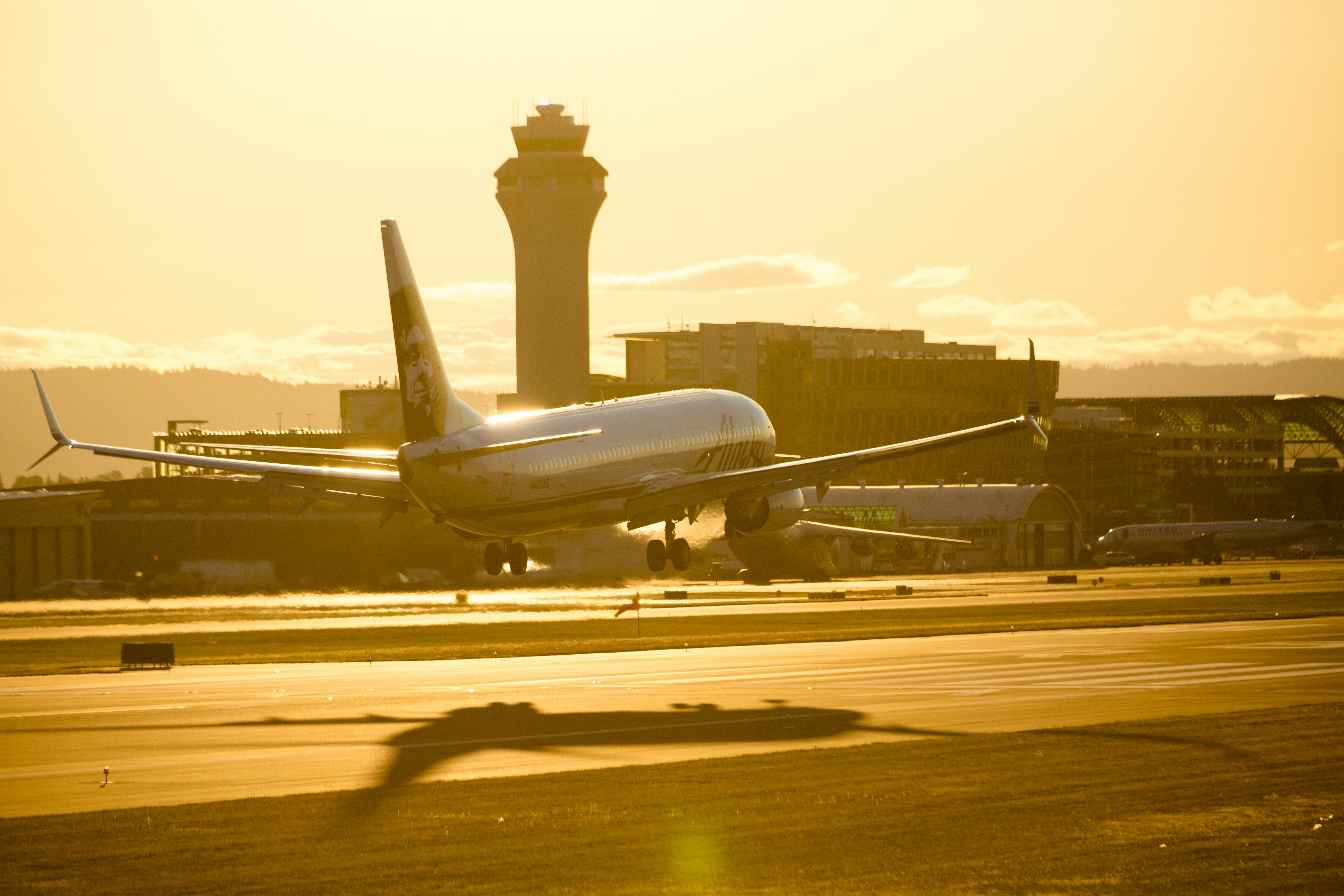
FAA Ground Stop at O'Hare: A Lead-Response Playbook for Travel and Service Businesses
When the FAA issues a ground stop at a major hub like Chicago O'Hare, the immediate chaos isn't just in the terminal. Hundreds of flights are cancelled, and thousands of travelers are suddenly stranded, all scrambling for the same things at the same time: a hotel room, a rental car, a ride home, or a seat on the next available flight.
For businesses that serve these travelers—hotels, transportation services, rental agencies, and even nearby restaurants—this isn't just a news story. It's a sudden, high-pressure wave of inbound inquiries. The phones start ringing with people who need an answer now, and they're likely calling your competitors at the same time.
This article uses the recent FAA ground stops at O'Hare and Midway as a real-world case study to build a repeatable playbook for handling a sudden demand surge. We'll cover how to prepare your lead-response system so you can capture time-sensitive bookings during a travel crisis, without your team being buried by the flood.
What Happened at O'Hare and Midway
Severe weather moving through the Chicago area prompted the Federal Aviation Administration to issue ground stops at both O'Hare International Airport (ORD) and Midway International Airport (MDW). The result was hundreds of flight cancellations across major carriers, leaving a large population of travelers with immediate, unmet needs.
According to reports from NBC Chicago and The Travel, the ground stops created a cascade of delays and cancellations that rippled through the day. For travelers, the priority shifted instantly from "arriving on time" to "finding a place to sleep and a way to get there."
For local businesses, this created a predictable but intense pattern: a sudden spike in last-minute booking requests, all arriving within a very short window.
The Demand Surge Pattern: What a Ground Stop Creates
When a ground stop hits a major airport, the demand for local services doesn't just increase—it concentrates. Here's what typically unfolds in the hours immediately following the announcement.
The First 60 Minutes: The Scramble
The moment travelers learn their flight is cancelled, they start searching for alternatives. This first hour is the most critical window for businesses. Travelers are:
- Searching for nearby hotel rooms with immediate availability.
- Checking rental car availability for one-way or local rentals.
- Requesting rideshare, taxi, or car service quotes for long-distance trips they'd rather not make.
- Looking for alternative flights from nearby airports, which may require ground transportation.
These are high-intent, time-sensitive leads. The traveler isn't browsing for a future trip; they need a solution tonight. But they're also likely contacting multiple businesses simultaneously. The first business to provide a clear, helpful response has a significant advantage.
The Next 3–6 Hours: The Ripple Effect
As the initial wave of stranded travelers secures accommodations, a secondary wave begins. This includes:
- Travelers whose flights were delayed but not yet cancelled, now proactively making backup plans.
- Business travelers rebooking meetings and extending hotel stays.
- Families and groups who need larger vehicles or multiple rooms, which takes longer to coordinate.
- Airport staff and crew members who are also stranded and need lodging.
The demand doesn't disappear after the first hour. It shifts from a frantic scramble to a more distributed but still elevated level of inquiries that can last well into the night and the following day.
The Operational Problem: Why Most Businesses Miss the Surge
A sudden demand surge sounds like a great problem to have. But for many travel and service businesses, it creates an operational bottleneck that actually causes them to lose revenue.
Here's what typically goes wrong:
- The team is overwhelmed. A front-desk agent or dispatcher can only handle one call at a time. When five calls come in at once, four go to voicemail.
- After-hours inquiries go unanswered. If the surge hits outside of normal business hours, leads may sit untouched until the next morning—long after the traveler has booked elsewhere.
- Manual follow-up breaks down. Even if someone answers the phone, the promise to "call back with availability" often gets lost in the chaos of the next incoming call.
- Inconsistent responses create confusion. Different team members may provide different information about availability, pricing, or policies, frustrating already-stressed travelers.
The core issue isn't a lack of demand. It's a lack of a system that can acknowledge, organize, and follow up with a sudden flood of inquiries without requiring a proportional increase in staff.
A Lead-Response Playbook for Sudden Demand Surges
The following framework is designed to be set up before a crisis hits, so it's ready to activate the moment demand spikes. While we're using the O'Hare ground stop as an example, this playbook applies to any event that creates a sudden, localized surge in time-sensitive inquiries—severe weather, a major convention, a festival, or a nearby event cancellation.
1. Set Up Instant Lead Acknowledgment
The single most important action during a demand surge is acknowledging every inquiry immediately. A traveler who submits a hotel inquiry and hears nothing for 20 minutes will likely have already booked somewhere else.
An automated SMS response, triggered the moment a lead comes in, can bridge this gap. The message doesn't need to confirm availability—it just needs to acknowledge the inquiry and set expectations.
For example:
"Thanks for reaching out to [Business Name]. We've received your inquiry and are checking current availability. We'll be back with you in just a few minutes. If this is urgent, please call us at [phone number]."
This buys your team a few minutes to catch up while preventing the traveler from feeling ignored and moving on.
2. Create a Surge-Specific Follow-Up Sequence
During normal operations, a follow-up sequence might be spaced out over several days. During a demand surge, the timeline compresses dramatically. A lead that isn't engaged within an hour may be gone forever.
Consider a compressed sequence for surge periods:
- Immediate (0 minutes): Auto-reply acknowledgment.
- 15 minutes: A follow-up with a specific question to qualify the lead. ("How many travelers are in your party?" or "What's your preferred pickup location?")
- 1 hour: A check-in if the lead hasn't been booked. ("We're still working on options for you. Would a [alternative option] work?")
- 3 hours: A final follow-up with a direct call to action. ("We have limited availability remaining. Reply YES if you'd like us to hold a spot.")
This sequence keeps the conversation alive during the critical window without requiring a human to remember to send each message.
3. Use Two-Way Messaging to Triage Without Tying Up Phones
During a surge, phone lines become a bottleneck. One person can only handle one call at a time. But a single team member can manage multiple text conversations simultaneously.
Encouraging travelers to reply via text allows your team to:
- Triage inquiries by urgency. Someone who needs a room immediately gets priority over someone planning for a possible delay.
- Collect qualifying information (number of guests, destination, vehicle type) without a long phone conversation.
- Send booking links or payment requests directly in the conversation thread.
This approach lets a small team handle a much larger volume of inquiries than phone-only communication would allow.
4. Prepare Your Team with a Surge Protocol
Automation handles the initial response, but your team still needs to know what to do when they step in. A simple surge protocol might include:
- A designated point person for monitoring the lead dashboard during the surge.
- Pre-written response templates for common scenarios: "We're fully booked but here's an alternative," "We have availability, here's how to secure it," "We need more information to provide a quote."
- A clear handoff process for when a lead needs to move from text to phone.
- A post-surge debrief to identify what worked and what broke down.
The goal is to make the human part of the process as efficient as the automated part.
5. Capture Leads from Every Source
During a surge, travelers will find you through multiple channels: your website, Google Business Profile, online travel agencies, social media, and direct phone calls. If any of these channels feed into a different system—or worse, into a single person's email inbox—leads will fall through the cracks.
Ensure that every lead source feeds into a single system where:
- Every inquiry triggers the same instant acknowledgment.
- Every lead is visible in one dashboard.
- No lead sits in a separate inbox waiting to be checked.
This is especially important during a surge, when the volume makes manual monitoring of multiple channels impossible.
Why Speed Matters More During a Crisis
The general case for fast lead response is well-established: businesses that respond first are more likely to win the customer. But during a travel crisis, the dynamics intensify.
- The need is urgent. A stranded traveler isn't comparison shopping for the best deal. They're looking for the first available solution.
- The window is short. Decisions that might normally take days are made in minutes.
- Competition is simultaneous. Every nearby hotel, rental agency, and car service is receiving the same surge of inquiries at the same time.
In this environment, a response that arrives in 30 seconds may win the booking. A response that arrives in 30 minutes may arrive after the traveler has already checked into a competitor's hotel.
Preparing for the Next Surge
The O'Hare ground stop is a reminder that demand surges are predictable in their unpredictability. You know they'll happen; you just don't know exactly when. The businesses that capture the most value from these events are the ones that have their response system in place before the first inquiry arrives.
Here's what you can do today to prepare:
- Audit your current lead response time. How long does it take for a new inquiry to receive a first response? If it's measured in hours rather than seconds, you have a vulnerability.
- Map your lead sources. Identify every channel where a traveler might contact you. Is there a single system that captures all of them?
- Draft your surge templates. Write the acknowledgment and follow-up messages you'd want to send during a crisis. Having them ready means you can activate them in minutes.
- Test your system. Send a test inquiry through your own website or booking platform and experience what a real traveler experiences.
Key Takeaways
- FAA ground stops create a sudden, concentrated demand surge for hotels, rental cars, transportation, and local services near affected airports.
- The first hour is critical. Stranded travelers make decisions quickly and often go with the first business that responds helpfully.
- Manual response processes break down under surge volume. A team that can handle normal inquiry volume may be overwhelmed when five or ten requests arrive simultaneously.
- Instant automated acknowledgment prevents leads from going cold while your team catches up.
- A compressed follow-up sequence keeps high-intent leads engaged during the short decision window.
- Two-way text messaging allows a small team to triage and manage more inquiries than phone-only communication.
- Preparation is the advantage. Businesses that set up surge-ready response systems before a crisis hits will capture more time-sensitive bookings than those scrambling to react.
FAQ: Handling a Travel-Disruption Demand Surge
How quickly should I respond to a stranded traveler's inquiry?
Within seconds, if possible. An automated acknowledgment that arrives immediately can hold the lead's attention while your team prepares a specific response. A delay of even 15–20 minutes may mean the traveler has already booked elsewhere.
What if I'm fully booked during a surge?
Acknowledge the inquiry anyway. A quick response that says "We're currently full but checking for cancellations" keeps the door open. You can also offer to refer the traveler to a partner business, which builds goodwill and may generate future referrals.
Can I use the same follow-up sequence for every surge event?
You can use the same structure, but you should customize the messaging for the specific event. A weather-related ground stop has a different context than a convention or festival surge. The acknowledgment should feel relevant to what the traveler is experiencing.
What if the surge hits after hours?
This is where automation becomes essential. An after-hours auto-reply that acknowledges the inquiry and sets expectations for when the team will follow up can prevent leads from being lost overnight. Pair it with a morning follow-up sequence that prioritizes overnight inquiries.
How do I know if my current system can handle a surge?
Run a stress test. Have several people submit inquiries through your different lead sources at the same time and track what happens. Does every inquiry receive a response? How long does it take? Where do the bottlenecks appear?
Stop Losing Time-Sensitive Leads to Slow Follow-Up
A demand surge is an opportunity, but only if your response system can handle the volume. SecureMyLead helps travel and service businesses automatically respond to new leads in seconds, run personalized SMS follow-up sequences, and manage two-way conversations from a single dashboard—so no inquiry goes unanswered, even when demand spikes.
Related Reading: