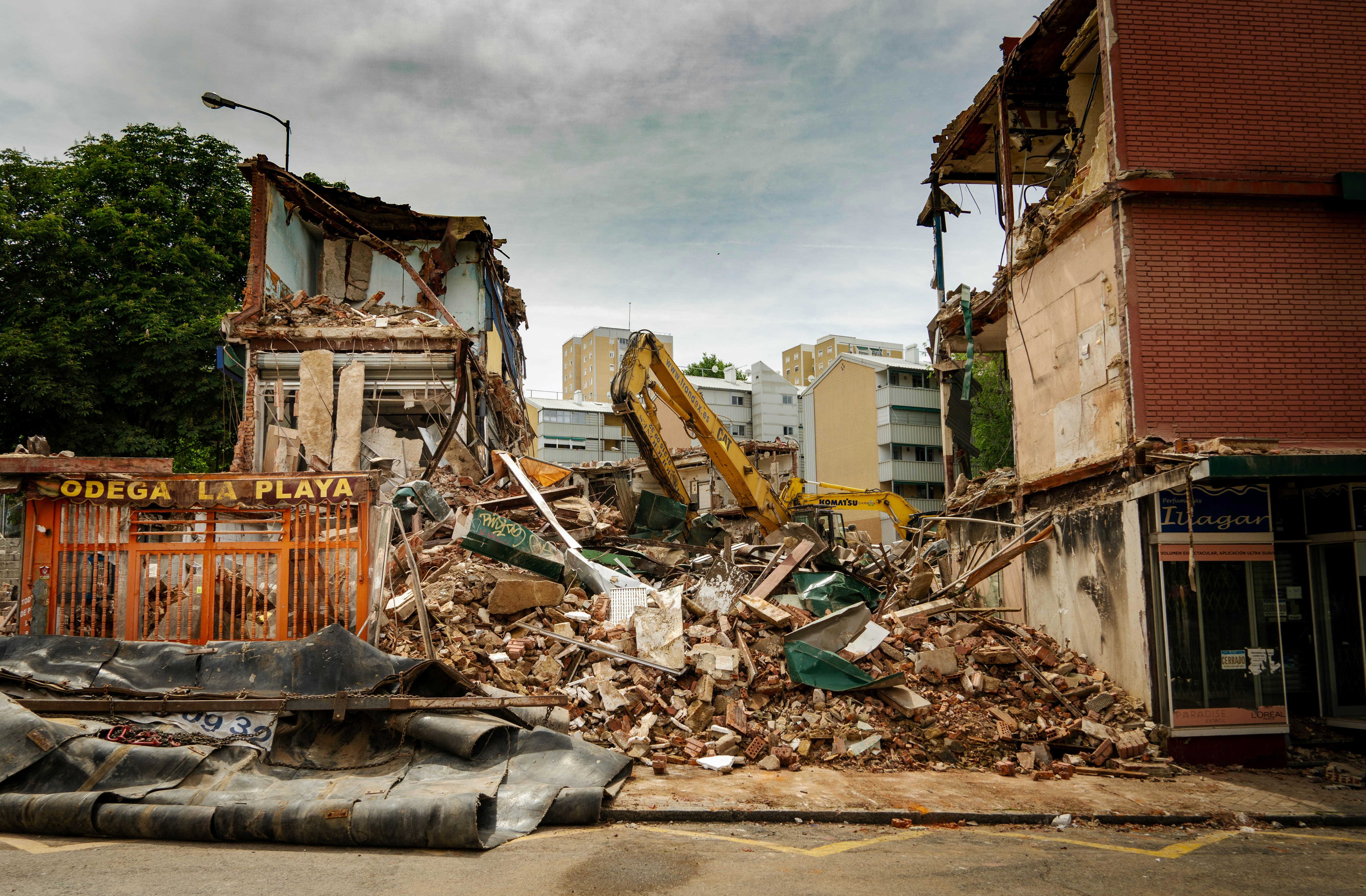
Earthquake Damage Lead Response Checklist for Contractors
A magnitude 4.3 earthquake rattled Wallowa County, Oregon, with Fox Weather reporting moderate shaking. The East Oregonian described the northeastern Oregon event as the region’s strongest earthquake in more than 30 years. Fox Weather and the East Oregonian establish the event, but they do not document widespread property damage or a rise in contractor demand.
Still, after an earthquake, roofing companies, restoration businesses, structural inspectors, plumbers, and electricians should be ready in case property owners begin asking questions or requesting inspections.
Safety comes before lead handling. If an inquiry describes an immediate threat to life or property — such as a suspected gas leak, downed power line, fire, carbon monoxide concern, medical equipment losing power, or a possible structural collapse — direct the person to the appropriate emergency authorities or utility provider. Do not diagnose a building’s safety through a form submission, text message, or phone call.
For non-emergency inquiries, a clear response process can help your team acknowledge the request, collect useful information, route it to the right person, and avoid treating every earthquake-related concern as the same kind of job.
Table of contents
- Start with safety, not scheduling
- The earthquake-damage lead response checklist
- Questions to ask before an inspection
- How to prioritize earthquake-related inquiries
- SMS templates for non-emergency inquiries
- Set up an escalation and handoff process
- Follow up with leads that are not ready to book
- Use automation as acknowledgment, not emergency triage
- Earthquake-damage lead response FAQ
Start with safety, not scheduling
An earthquake-related inquiry can range from “I noticed a small crack in my drywall” to “My house shifted and I smell gas.” Your response workflow needs to recognize that those situations do not belong in the same queue.
Your first-response process should clearly separate:
- Immediate life-safety or utility concerns Direct the person to emergency authorities, their utility provider, or another appropriate emergency resource. Do not promise a contractor visit will make an unsafe condition safe.
- Potential structural concerns without an active emergency Flag these for qualified human review. Do not tell the customer their property is structurally sound, unsafe, or ready for repair based only on a message or photo.
- Routine inspection and repair inquiries Collect details, photos where appropriate, location, and scheduling availability. These may include visible cracks, roof concerns, plumbing leaks, electrical issues, or cosmetic damage that the customer wants assessed.
The goal is not to turn your office into an emergency dispatch center. It is to avoid losing track of routine inspection requests while ensuring that automated replies do not minimize a potentially serious concern.
The earthquake-damage lead response checklist
Use this checklist when multiple inquiries may arrive in a short period.
1. Acknowledge the inquiry promptly
A fast acknowledgment tells the property owner their message was received. It should not diagnose damage, promise immediate service, or guarantee an appointment.
Include:
- Your business name
- Confirmation that you received the request
- A short safety boundary
- A clear next step
- A request for the best callback number if needed
Example:
Hi [First Name], this is [Business Name]. We received your earthquake-related inspection request. If there is an immediate safety concern, suspected gas leak, fire, downed line, or risk of collapse, please contact the appropriate emergency authorities or utility provider. For non-emergency inspection requests, a team member will review your details and follow up.
This is an acknowledgment, not a safety assessment.
2. Confirm the property location
Ask for the full service address early. Location determines:
- Whether the property is inside your service area
- Which technician, inspector, or estimator should receive the lead
- Travel and scheduling considerations
- Whether several nearby inquiries should be reviewed by the same team member
For a business working across several towns or rural areas, this single step can prevent time-consuming back-and-forth.
3. Identify the type of concern
Do not ask customers to diagnose their own property. Instead, ask what they noticed.
Useful categories may include:
- Visible cracks in walls, ceilings, masonry, foundation areas, or chimneys
- Roof concerns, loose materials, new leaks, or visible shifts
- Water leaks, damaged pipes, or plumbing changes
- Electrical concerns, damaged panels, outlets, fixtures, or exposed wiring
- Water intrusion or restoration needs
- Doors, windows, cabinets, or floors that appear to have shifted
- A request for a general post-earthquake inspection
Use categories for routing, not for reaching conclusions about severity.
4. Screen for immediate safety language
Build a simple internal flag for messages mentioning terms such as:
- Gas smell or suspected gas leak
- Smoke, fire, sparks, or burning smell
- Downed lines or damaged electrical equipment
- Collapse, major shifting, or inability to safely enter
- Someone injured or trapped
- Medical equipment affected by a power outage
When those terms appear, stop the ordinary estimate workflow. Send the lead to a human reviewer and provide the safety direction your business has approved: contact the appropriate emergency authorities or utility provider.
5. Request photos only when it is safe to do so
Photos can help a qualified team member understand what the customer has observed before a call or inspection. But never encourage someone to enter a potentially unsafe area, climb on a roof, approach damaged electrical equipment, or get close to a suspected gas leak just to take pictures.
A safe request is simple:
If it is safe to do so, you can reply with photos of the area you are concerned about. Please do not enter an unsafe space or approach damaged utility equipment to take photos.
Keep the photos attached to the lead record or job folder so the person calling back has the same context.
6. Assign a human owner
Every inquiry should have a named owner, even if the next action is only “review and call back.”
Possible owners include:
- Office coordinator for service-area and scheduling checks
- Estimator for standard inspection requests
- Licensed trade professional for plumbing or electrical questions
- Qualified inspector or engineer referral path for structural concerns
- Restoration coordinator for water intrusion or cleanup-related questions
A lead with no owner is more likely to be answered twice, answered late, or forgotten.
7. Record the next action and deadline
For each lead, capture:
| Field | Why it matters |
|---|---|
| Contact name and number | Supports a callback and follow-up |
| Property address | Confirms service area and routing |
| Reported concern | Gives the reviewer context |
| Safety flag | Separates urgent concerns from normal scheduling |
| Photos received | Avoids repeat requests |
| Assigned owner | Makes accountability clear |
| Next action | Defines what happens next |
| Follow-up date | Prevents unbooked leads from disappearing |
This does not require a complex CRM. It does require a consistent place where the team can see the inquiry and its next step.
Questions to ask before an inspection
Once a qualified person is reviewing a non-emergency lead, keep your questions short and practical.
Core intake questions
- What is the property address?
- What did you notice after the shaking?
- Which area of the property concerns you most?
- Is the issue visible indoors, outdoors, or both?
- Is there active leaking water, a loss of power, or another condition that needs separate urgent attention?
- Is the property currently occupied?
- Is it safe for someone to be at the property based on what you know?
- Can you share photos if it is safe to take them?
- What is the best time for a qualified team member to call?
- What appointment windows could work if an inspection is appropriate?
Avoid giving a repair price or declaring the cause of a crack before an appropriate inspection. Earthquake-related calls can involve uncertainty, and a rushed diagnosis may create safety, customer-service, and liability problems.
How to prioritize earthquake-related inquiries
If inquiries rise, prioritize by safety and operational readiness — not simply by who submitted a form first.
Priority 1: Escalate immediately
These are not routine contractor leads:
- Suspected gas leaks
- Fire, smoke, sparks, or burning smells
- Downed electrical lines
- Possible collapse or severe structural instability
- Injury, entrapment, or immediate medical risk
- Medical equipment affected by loss of power
Direct customers to the appropriate emergency authorities or utility provider. Do not use automated messaging to decide whether the situation is safe.
Priority 2: Qualified human review
These leads may need prompt review but should not receive an automated diagnosis:
- Reports of major new cracks or shifting
- A chimney, wall, roof, or exterior feature that appears unstable
- Significant water intrusion
- Electrical damage that is not an active emergency
- Plumbing damage or active leaks that require a professional assessment
The right next step may be a call, a site visit, a referral, or a request for more information. Your team should decide that — not the auto-reply.
Priority 3: Standard inspection requests
These are generally the best fit for your normal lead-management workflow:
- Homeowners requesting a post-earthquake inspection
- Minor visible cracks they want evaluated
- Roof, gutter, siding, or masonry concerns
- Non-urgent plumbing or electrical inspection requests
- Customers gathering information before deciding whether to book
These leads still deserve timely acknowledgment, clear expectations, and a follow-up plan.
SMS templates for non-emergency inquiries
Use these only for contacts who have provided appropriate consent to receive text messages. Include opt-out handling and follow applicable messaging laws.
Initial acknowledgment
Hi [First Name], this is [Business Name]. We received your request about possible earthquake-related property damage at [Address]. If there is an immediate safety concern, suspected gas leak, fire, downed line, or collapse risk, please contact the appropriate emergency authorities or utility provider. For non-emergency inspection requests, a team member will review your details and follow up.
Photo request
Thanks, [First Name]. If it is safe to do so, you can reply with photos of the area you noticed. Please do not enter an unsafe space, climb on a roof, or approach damaged utility equipment to take photos.
Scheduling follow-up
Hi [First Name], this is [Business Name] following up on your inspection request. We have [Option 1] and [Option 2] available for a non-emergency visit. Would either work for you?
Not-ready-to-book follow-up
Hi [First Name], checking back on your earthquake-related inspection request. If you still want to discuss an inspection or share more details, reply here and our team can help with next steps.
For more general contractor reply examples, see our guide to auto-reply messages for contractors and estimate follow-up text templates for contractors.
Set up an escalation and handoff process
A documented handoff process matters most when the business is busy.
Give your team a simple decision tree
If an inquiry mentions immediate danger: Stop standard follow-up. Direct the person to appropriate emergency authorities or the utility provider, then notify the designated internal reviewer.
If the inquiry may involve structural, electrical, gas, or major water concerns but no immediate danger is described: Assign a qualified person to review and decide the next contact.
If the inquiry is a standard inspection request: Confirm location, gather details, assign an owner, and offer the next appropriate appointment step.
Set boundaries before the event
Decide in advance:
- Who monitors incoming messages after hours
- Which team member handles safety-flagged messages
- Which services you can and cannot provide
- When you refer customers to another qualified professional
- What your team is allowed to say in texts
- What appointment capacity you can realistically offer
- How you will communicate delays if requests increase
This preparation is useful even if the volume of inquiries never changes. It gives your team a safer, clearer process for unusual property-damage calls.
Follow up with leads that are not ready to book
Some property owners may not want an inspection immediately. They may be waiting to speak with family, review their property further, contact an insurer, or decide which type of professional they need.
Do not pressure them. Instead, make follow-up helpful and specific.
A simple sequence could be:
- Same day: Acknowledge the request and explain the next step.
- After human review: Provide the relevant inspection or callback option.
- Two to three days later: Check whether they still want to schedule.
- One week later: Send one final, low-pressure follow-up and make it easy to reply.
Every message should reflect what the customer already told you. A roofing inquiry should not receive a generic plumbing message, and someone asking about a possible structural issue should not be pushed directly into a standard repair estimate.
If your team struggles to keep these next steps organized, review how to build a lead follow-up system that runs automatically.
Use automation as acknowledgment, not emergency triage
Automation can help when several web forms, missed calls, or text inquiries arrive while your team is working in the field. For earthquake-related inquiries, its role should be narrow and safe:
- Confirm receipt of a non-emergency inquiry
- Share approved safety boundaries
- Ask for address and preferred callback details
- Request photos only if it is safe
- Route the lead for human review
- Send a scheduling or no-response follow-up after a person has set the right path
SecureMyLead can automatically send an SMS acknowledgment when a new lead arrives and support follow-up sequences for contacts who have given appropriate messaging consent. It should not be used to diagnose damage, promise emergency response, estimate costs, or replace the judgment of an inspector, engineer, utility provider, or emergency responder.
If you use scheduled follow-ups, remember that ordinary replies are visible in the dashboard but do not currently auto-pause scheduled sequence messages. Your team should monitor replies and manage the sequence appropriately so a customer does not receive an irrelevant automated reminder after a live conversation.
Key takeaways
- The reported Wallowa County earthquake establishes a reason for contractors to prepare, not evidence of a documented contractor lead surge.
- Treat immediate life-safety, utility, fire, gas, and collapse concerns as emergency matters — not estimate requests.
- Use automation to acknowledge a new inquiry and collect basic details, while reserving safety assessment and job decisions for qualified people.
- Route leads by concern type, location, safety flag, and service capability.
- Give every inquiry a human owner, next action, and follow-up date.
- Keep earthquake-related messages factual, calm, and free of unsupported promises.
Earthquake-damage lead response FAQ
Should contractors send an automatic text after an earthquake-related form submission?
They can, provided the contact has given appropriate consent to receive texts and the message is limited to acknowledgment, approved safety guidance, and a next step. Do not use an auto-reply to diagnose structural safety, estimate repairs, or promise emergency service.
What should a contractor do if a customer mentions a gas leak or downed power line?
Direct them to the appropriate emergency authorities or utility provider. Do not treat the message as a routine service request or attempt to assess the danger remotely.
Can a roofing or restoration company qualify structural-damage leads by text?
A text conversation can collect basic details such as the address, what the customer observed, and safe-to-share photos. It should not replace evaluation by an appropriately qualified professional.
What if the customer is not ready to schedule an inspection?
Record their concern and send a helpful, low-pressure follow-up after a reasonable interval. The aim is to make it easy to reconnect if they decide they need an inspection.
How can a small contractor team avoid missing inquiries during a possible spike?
Use a shared intake process with clear safety flags, assigned ownership, documented next actions, and consistent follow-up. An after-hours acknowledgment workflow can help ensure new non-emergency inquiries do not sit unnoticed. Our guide to after-hours lead response covers the broader workflow.
Related reading
- Contractor web form auto response: what to send the second a new lead hits your site
- How electricians can respond to leads faster and book more jobs
- Automated lead follow-up systems for contractors
A prepared intake process can help your team acknowledge non-emergency inquiries consistently while qualified people handle the decisions that require judgment. Get started free to build a follow-up workflow for the leads you already generate.