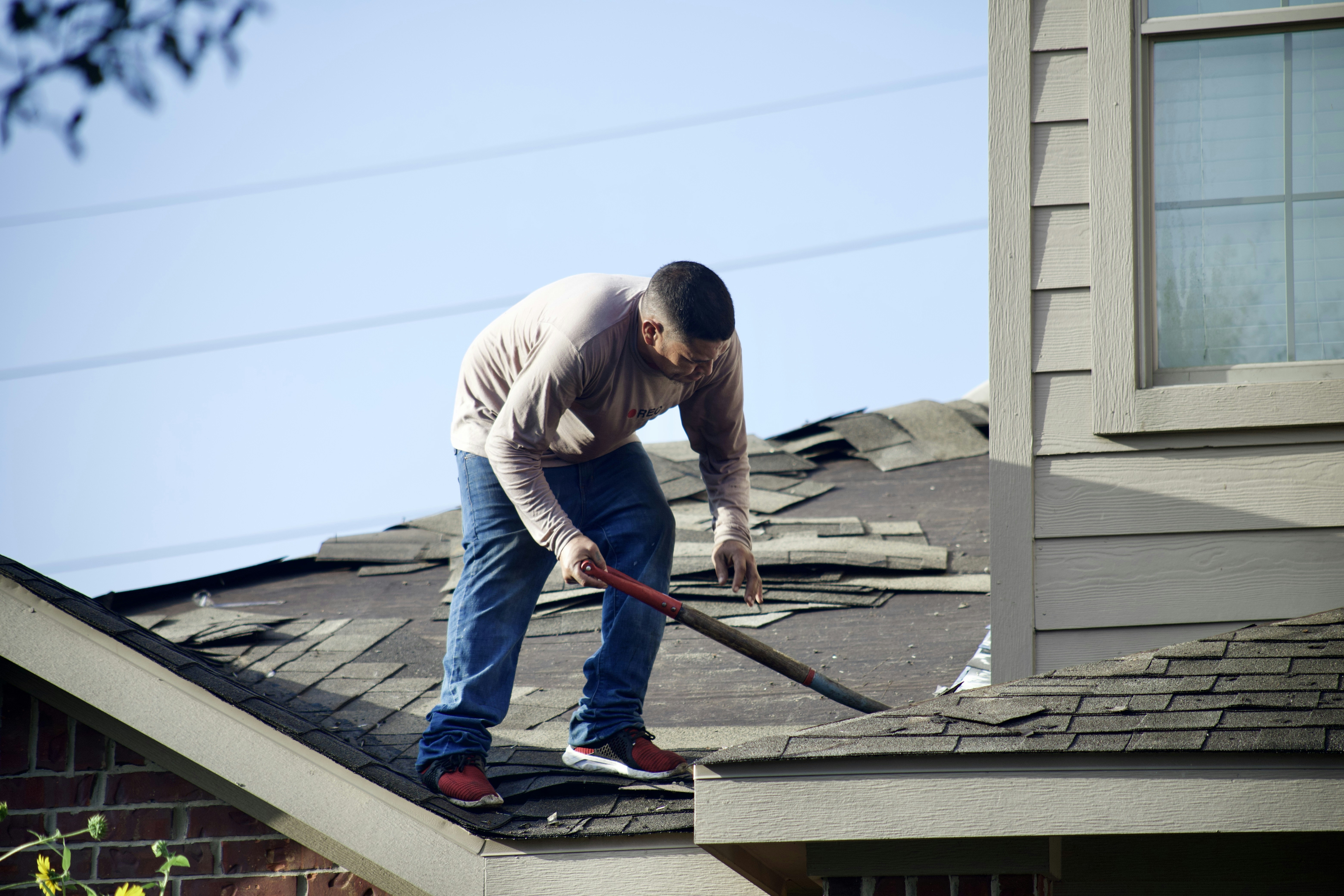
Storm-Damage Lead Response for Roofers During Severe Weather
When tornado warnings or severe weather affect your service area, your team may receive inspection requests, leak reports, tarping questions, and estimate inquiries with very different levels of urgency.
Recent reporting described tornado warnings for Amarillo, Bishop Hills, and Cliffside, along with multiple severe-weather warnings elsewhere in the Texas Panhandle. Those warnings do not prove that roofing inquiries increased or that every property sustained damage. But roofing and restoration businesses in affected areas should be prepared in case inquiries rise after severe weather. Cedar News and NewsChannel 10 reported on the Panhandle warnings.
The goal is not to promise every caller an immediate visit. It is to acknowledge each inquiry, identify situations that need emergency help, capture the information your team needs, assign a clear owner, and give customers a realistic next step.
Table of contents
- Start with safety, not sales
- Use a simple storm-damage intake process
- Separate emergency hazards from roofing requests
- Set capacity-aware callback expectations
- Create one shared storm-lead board
- Storm-damage response templates
- Use automation for acknowledgment, not emergency decisions
- Common mistakes during weather-related demand
- Key takeaways
- FAQ
Start with safety, not sales
A roofing business should never treat a potentially dangerous situation as a normal estimate request.
If a customer reports immediate danger, direct them to local emergency services before discussing inspections, scheduling, insurance, or pricing. This includes reports involving:
- Downed power lines
- A suspected gas leak
- Carbon monoxide concerns
- Fire
- A person who depends on powered medical equipment and has lost electricity
- Any immediate threat to people or property that requires emergency assistance
Do not ask a homeowner to climb onto a roof, enter a damaged area, move debris near power lines, or wait for your crew instead of contacting emergency services.
For all other inquiries, keep the first conversation focused on understanding the situation and setting an appropriate next step.
Use a simple storm-damage intake process
During ordinary weeks, a new roofing lead might be a straightforward inspection or estimate request. After severe weather, the same inbox can include active leaks, possible debris damage, questions about temporary protection, and people seeking inspection documentation.
A storm-specific intake process keeps those requests from becoming one unorganized list of “call back later.”
1. Acknowledge the inquiry promptly
A quick acknowledgment lets the customer know their message arrived, even when your field team cannot immediately answer the phone.
Your acknowledgment should do three things:
- Identify your business.
- State that you received the request.
- Tell the customer what information to send or what will happen next.
Avoid promising an inspection time before checking service area, crew availability, and the nature of the issue.
Example:
Hi [First Name], this is [Business Name]. We received your storm-damage roofing request. Please reply with your property address, the issue you’re seeing, and whether there is an active leak or another immediate safety concern. Our team will review the details and follow up with the next available step.
This is more useful than an empty “Thanks, we’ll be in touch” message because it starts collecting information your team needs to prioritize responsibly.
For more general first-response examples, see our guide to auto-reply messages for contractors.
2. Capture the same details from every lead
A consistent intake record prevents your team from repeatedly calling customers just to find out where they are or what happened.
Use a form, call script, inbox template, or shared lead record to capture:
| Intake item | Why it matters |
|---|---|
| Name and best callback number | Gives the assigned team member a reliable contact method. |
| Property address | Confirms service area and helps group leads geographically. |
| Type of property | Helps distinguish residential, commercial, rental, or other requests. |
| What the customer observed | Separates a possible leak, missing materials, visible debris, or a general inspection request. |
| Whether the issue is active now | Helps identify situations needing faster human review. |
| Whether anyone is in immediate danger | Creates a clear point to direct the caller to emergency services when appropriate. |
| Preferred contact method | Helps your team respond in the way the customer is most likely to see. |
| Photos, if they can safely provide them | Can give your team context without asking anyone to put themselves at risk. |
| Lead source | Shows whether the inquiry came from a call, web form, referral, ad, or social message. |
| Current status and owner | Prevents two people from making conflicting promises—or nobody responding. |
Do not make every field mandatory before acknowledging the customer. The first goal is a clear, safe handoff. Your team can fill in missing details during a callback.
3. Tag the lead by request type
The most useful storm-lead categories are based on what your team needs to do next, not on vague labels such as “hot” or “urgent.”
Consider tags such as:
- Safety concern—escalate
- Active interior leak reported
- Temporary protection inquiry
- Storm-damage inspection request
- Possible damage; no active issue reported
- Insurance or documentation question
- Outside service area
- Unable to reach
- Scheduled for follow-up
- No current capacity—follow up later
These labels do not make emergency decisions for your team. They make it easier for a human to see what requires attention and what can enter the inspection queue.
Separate emergency hazards from roofing requests
A storm-damage lead workflow needs more than one priority level. A homeowner with an active concern and a homeowner requesting a routine inspection should not receive the same follow-up path.
Here is a practical separation model.
Category 1: Immediate safety concern
Use this category only when the customer reports a danger that may require emergency response, such as downed lines, fire, a gas concern, carbon monoxide, or a medical equipment power-loss issue.
Team action: Direct the customer to local emergency services. Document the report and avoid providing emergency instructions outside your expertise.
Do not: Promise that a roofer is the appropriate emergency responder or imply your team can resolve hazards outside its qualifications.
Category 2: Active property issue requiring prompt human review
This can include an active leak or another current condition that may require a prompt conversation with a qualified roofing or restoration professional.
Team action: Assign a person to review the request, confirm location and capacity, and explain the available next step without guaranteeing a visit time you cannot meet.
Do not: Tell every customer that a crew is “on the way” unless that is confirmed.
Category 3: Inspection, estimate, or possible damage inquiry
Many leads may simply want to know whether their roof needs an inspection after a storm.
Team action: Collect property details, confirm service area, and place the lead into the appropriate inspection or callback queue.
Do not: Treat an inspection request as proof of damage, an insurance claim outcome, or a booked job.
Category 4: Lower-priority or incomplete inquiry
Examples include a form submission without an address, a request outside your territory, or a customer who stopped responding after the first message.
Team action: Send a short follow-up that asks for the missing detail, then keep the lead in a controlled follow-up sequence rather than letting it disappear.
Set capacity-aware callback expectations
A weather event can create uncertainty for customers and staff. The temptation is to promise speed to every lead. That can create a second problem: a backlog of callbacks and appointments your team cannot honor.
Instead, use language that is clear but realistic.
Better expectation-setting language
- “We’ve received your request and are reviewing storm-related inquiries by location and current need.”
- “Please send your address and a brief description so we can confirm the appropriate next step.”
- “A team member will follow up after reviewing your request and our current availability.”
- “We are scheduling inspections as availability allows. We’ll confirm options once we review your location and request.”
Language to avoid
- “We’ll be there today” when you have not checked the schedule.
- “You’re first in line” unless that is actually true.
- “We handle all emergency damage immediately.”
- “Your insurance will cover this.”
- “Your roof definitely has storm damage.”
A realistic expectation is not weak customer service. It is what keeps your team credible when weather-related inquiries become harder to manage.
Group work by geography when possible
If several inquiries come from the same neighborhood or nearby ZIP codes, group them for review. That can make route planning more practical and reduce time lost driving between scattered inspections.
But do not tell customers you will be in their neighborhood unless that route is actually confirmed. Use the information internally first; communicate a schedule only when someone owns it.
Create one shared storm-lead board
The operational problem during severe weather is often not a lack of inquiries. It is that calls, forms, voicemails, Facebook messages, referrals, and text messages land in separate places.
A shared storm-lead board gives the team one source of truth. It can be a CRM view, spreadsheet, dispatch board, or a simple lead system—provided everyone uses it.
Minimum columns for a storm-lead board
| Field | Example |
|---|---|
| Lead name | Jordan M. |
| Address | Street, city, ZIP |
| Request type | Inspection request |
| Safety concern reported | No |
| Active issue reported | Possible leak |
| Source | Website form |
| Assigned owner | Alex |
| Last contact | Text acknowledgment sent |
| Next action | Call to gather details |
| Next action due | Review at next office check-in |
| Capacity status | Pending schedule review |
The most important fields are assigned owner and next action due. A lead is not truly covered because it has a tag or an automated text. It is covered when a specific person knows what they need to do next.
Assign one person to own the queue
On a small team, that may be the owner, office manager, estimator, or the person covering phones that day. The role can rotate, but it should not be ambiguous.
That person should be responsible for:
- Reviewing new storm-related inquiries.
- Escalating reported safety concerns appropriately.
- Assigning callbacks and inspections.
- Checking whether promised follow-ups happened.
- Pausing or adjusting generic messages when a real conversation is underway.
- Marking leads that are outside the service area or no longer active.
This is especially important if you use automated follow-up. Automation can acknowledge and continue outreach, but a person still needs to manage the live situation.
Storm-damage response templates
These templates are designed for acknowledgment and information gathering. Edit them to match your actual service area, availability, and process.
New storm-damage web form response
Hi [First Name], this is [Business Name]. We received your roofing request. Please reply with the property address, what you noticed after the weather, and whether there is an active leak or any immediate safety concern. We’ll review the details and follow up with the appropriate next step.
Missed-call text back
Hi [First Name], this is [Business Name]. Sorry we missed your call. We’re reviewing roofing inquiries at the moment. Please text your property address and a short description of the issue so we can route your request correctly.
Inspection-request follow-up
Hi [First Name], following up on your request for a roof inspection at [Address]. If you’d still like to be considered for an inspection, please reply with the best time to reach you and any details about what you observed.
Request for missing address
Thanks for reaching out to [Business Name]. To confirm whether we can help, please send the property address and ZIP code. Once we have that, we can review your request and current availability.
Capacity-aware scheduling message
Hi [First Name], we have your request for [Address]. We’re reviewing storm-related inquiries and scheduling based on location and current availability. We’ll contact you with the next available option after our team reviews the details.
No-response follow-up
Hi [First Name], this is [Business Name] checking back on your roofing request. If you still need help, reply with your address and a brief note about the issue, and we’ll review the next step.
For more contractor-specific follow-up language after an estimate or inspection, read our estimate follow-up text templates for contractors.
Use automation for acknowledgment, not emergency decisions
Automation can be useful when weather-related inquiries arrive while your team is on roofs, driving, or handling current customers. It can immediately acknowledge a lead, ask for an address and basic issue details, and continue following up with people your team has not yet reached.
That said, automation should support your process—not replace human judgment.
A sensible storm workflow may look like this:
- A new lead arrives from a form, call, or connected source.
- An automatic text acknowledges the request and asks for key intake details.
- The lead enters a storm-specific review queue.
- A designated person reviews reported hazards, active issues, location, and capacity.
- The lead is assigned to a human owner for a callback, inspection discussion, or an appropriate response.
- Leads that do not reply receive measured follow-up messages rather than being forgotten.
- Once a live conversation begins, the owner reviews scheduled messages so outreach stays appropriate.
SecureMyLead can send an initial SMS as soon as a lead is captured and run personalized multi-step follow-up sequences. That can help a roofing business acknowledge storm-related inquiries and keep incomplete or no-response leads from sitting untouched.
However, ordinary replies do not currently auto-pause scheduled sequence messages. Your team should monitor active conversations and adjust follow-up when needed. The system is the follow-up layer; it does not replace your dispatcher, scheduler, estimator, or emergency decision-maker.
Get started free to build a more consistent lead-response workflow before the next severe-weather event.
Common mistakes during weather-related demand
Treating every inquiry as the same job
A general inspection request, an active leak report, and a possible emergency hazard require different handling. One generic reply can leave customers confused and your team poorly prioritized.
Promising service before checking capacity
The fastest way to damage trust is to promise an arrival or inspection window that your team cannot meet. Confirm service area, demand, staffing, and route availability first.
Asking customers to diagnose the roof
Customers can describe what they see, but your intake process should not expect them to identify technical roof failures. Ask plain-language questions: what happened, what is visible, whether water is currently entering the property, and where the property is located.
Leaving no-response leads without a next action
A homeowner may submit a form while managing a stressful situation, then miss your first callback. A brief, respectful follow-up can reopen the conversation without pressuring them.
Letting every channel become its own queue
If the office checks web forms, one estimator checks texts, and the owner checks social messages, leads can be missed or answered twice. Route every storm-related inquiry into one shared view.
Forgetting to update your team
Field staff need to know whether they are taking inspections, whether the service area has changed, and what they can promise. A short morning and afternoon capacity check may be more useful than a complicated process no one follows.
Key takeaways
- Tornado warnings and severe weather can make it wise for roofing and restoration teams to prepare for possible storm-related inquiries, but warnings do not prove that demand or damage occurred.
- Put emergency guidance first when customers report immediate hazards. Direct them to local emergency services rather than treating the situation as a standard roofing lead.
- Use intake questions that capture address, issue type, active conditions, safety concerns, contact details, and lead source.
- Separate emergency hazards, active property issues, inspection requests, and incomplete leads into different human-reviewed paths.
- Give realistic callback and scheduling expectations based on actual service area and capacity.
- Assign each lead an owner and a next action so acknowledgment does not become a dead end.
- Use automated SMS to acknowledge and follow up consistently, while keeping a human responsible for live conversations and prioritization.
FAQ
Should roofers automatically offer emergency roof service after a storm warning?
No. A storm warning alone does not establish that a specific property needs emergency roofing work, and your business should not promise service it has not confirmed it can provide. Acknowledge the request, gather the facts, identify any immediate safety concern, and review capacity before committing to a next step.
What should a roofing intake form ask after severe weather?
At minimum, ask for the customer’s name, callback number, property address, a description of what they noticed, whether there is an active issue, and whether there is an immediate safety concern. Keep the questions simple so customers can answer without needing roofing expertise.
How should a roofer respond to a missed storm-damage call?
Send a short text that identifies your company, confirms the missed call, and asks for the property address plus a brief description of the issue. This gives your team enough information to route the request while the customer waits for a human callback.
Can automated text messages handle storm-damage lead triage?
Automated messages can acknowledge a request and collect basic details, but they should not make emergency decisions or replace human review. A qualified team member should assess reported hazards, availability, service area, and the appropriate next action.
What if a roofing team has no inspection availability?
Be direct. Let the customer know you received the request, explain that scheduling is subject to current availability, and avoid inventing a timeline. Keep a follow-up task or sequence in place if you intend to contact leads when capacity changes.