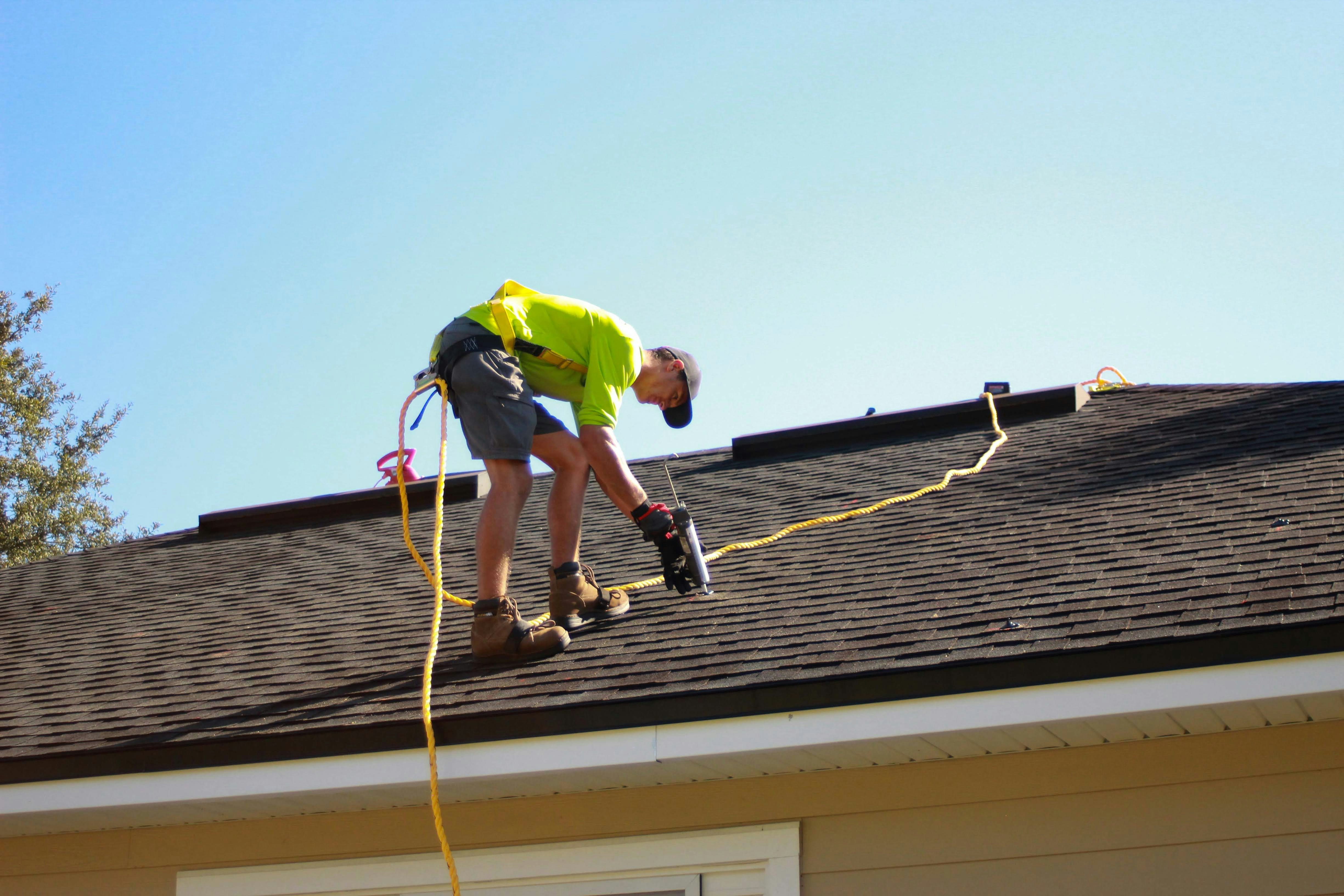
Roofing Contractors: Prepare for Possible Weather-Driven Lead Spikes
Storm coverage does not prove that roofing inquiries will increase. But it can be a useful signal to check whether your team is ready if inspection, leak, repair, or emergency-tarping requests start arriving at once.
Recent local reporting has described flooding, thunderstorms, hail risk, travel delays, and urban-flooding concerns in parts of Arizona and Southern California. Those reports are separate regional examples—not proof of a single local roofing-demand trend or documented lead surge. Still, conditions that concern homeowners can create a reason for roofing businesses to prepare their intake, follow-up, and crew-availability workflows.
Safety comes first. Do not use an automated text sequence to assess emergencies, diagnose roof damage, dispatch crews, or give safety instructions. Reports involving downed power lines, gas leaks, fire, carbon monoxide, medical equipment without power, or immediate danger need prompt human review and should follow local emergency-service guidance. Do not send crews to unsafe sites or promise a response time your team cannot meet.
This playbook helps roofers prepare for a possible influx of inquiries while keeping urgent decisions with trained people.
Table of contents
- Why weather coverage is a useful readiness trigger
- The roofing weather-response workflow
- 1. Prepare before inquiries arrive
- 2. Separate safety reports from standard roofing requests
- 3. Acknowledge every web form and missed call
- 4. Set inspection expectations without overpromising
- 5. Prevent duplicate and unowned leads
- 6. Keep following up while crews are busy
- Copy-and-paste roofing response templates
- How SecureMyLead fits into the workflow
- FAQ
Why weather coverage is a useful readiness trigger
For a roofing company, the operational problem is rarely just “more leads.” A weather event may create several different types of inquiries at the same time:
- A homeowner asking for an inspection after hail or heavy rain
- An active roof leak report
- A request for temporary protection or tarping
- A question about whether visible debris means roof damage
- An existing estimate customer asking to move faster
- An insurance-related question
- A duplicate inquiry submitted through a form, a phone call, and a social-media message
The business does not need to assume all of these are urgent—or that each one will become a job. It needs a way to acknowledge the inquiry, identify who owns the next step, and avoid leaving reasonable prospects with no answer while the team is occupied.
The weather context is real. Local reporting has described potential flooding and thunderstorms around Phoenix, hail risk in Arizona, and an urban-flooding watch or threat in Southern California. See reporting from AZFamily, FOX 10 Phoenix, and Univision. The practical takeaway for roofers is preparation, not a claim that those conditions caused additional leads.
The roofing weather-response workflow
A useful workflow has five stages:
- Prepare your messages, capacity status, and ownership rules.
- Acknowledge each new inquiry quickly.
- Route safety-sensitive, urgent, and routine requests for human review.
- Give realistic next steps rather than speculative diagnoses or promises.
- Follow up consistently until the customer books, declines, or needs a later check-in.
This is different from a generic lead funnel because weather-related roofing inquiries can have widely different urgency. Someone requesting a future inspection should not receive the same handling as someone reporting active water intrusion. At the same time, neither type should be left unacknowledged because everyone is on a roof or answering phones.
1. Prepare before inquiries arrive
A weather-ready lead process is built before the phone starts ringing.
Confirm who owns incoming leads
Choose a named person or role responsible for checking:
- New website forms
- Missed calls and voicemail
- Text replies
- Social-media messages
- Leads from advertising platforms or referral sources
- Existing customers who reply to old estimate messages
If the owner is on-site, the backup owner must be clear. “Someone will check it” is not ownership.
For a broader framework, see how to build a lead follow-up system that runs automatically.
Create a simple capacity status
Your intake team needs an honest answer to: What can we offer today?
Use a simple internal status such as:
| Status | What the team can offer | What the acknowledgment should say |
|---|---|---|
| Available | Same-day or near-term inspection windows may be available | Offer the next available inspection option after human confirmation |
| Limited | Crews are booked or weather conditions affect travel and inspections | Confirm receipt and explain that scheduling is being reviewed |
| Waitlist | New inspections may need to be scheduled later | Acknowledge the request and give a realistic timeframe only after human review |
| Paused | Conditions make site visits unsafe or impractical | Confirm receipt; do not promise an arrival or inspection time |
Do not put a “same-day emergency service” claim in an auto-response unless it is consistently true and your business can safely deliver it.
Prepare one intake form for roofing-specific details
A form can reduce back-and-forth, but it should not attempt to diagnose roof damage remotely. Ask for information that helps a human team prioritize and schedule:
- Name, phone number, and service address
- Best time to call
- Type of request: inspection, leak, repair, estimate, or other
- Whether water is currently entering the building
- Whether the customer has already contacted your company
- A brief description of what they noticed
- Optional photos, if your business accepts them
Keep any emergency, safety, insurance, and dispatch determination with a human reviewer.
2. Separate safety reports from standard roofing requests
The most important part of a weather-response workflow is not speed alone. It is recognizing that not all inquiries should follow the same path.
Use three practical buckets
A. Safety-sensitive or emergency reports
Examples include messages mentioning immediate danger, downed power lines, gas leaks, fire, carbon monoxide, or medical equipment losing power.
These should be flagged for immediate human review. Your automated acknowledgment should not attempt troubleshooting, provide safety instructions beyond local emergency guidance, or imply that a roofer can resolve a utility or medical emergency.
B. Active property-protection concerns
Examples may include active water entry, a leak, or a request for temporary roof protection.
A human should review these inquiries promptly to decide what your business can safely offer. Avoid diagnosing the cause by text, confirming that a roof needs replacement, or guaranteeing an arrival time before availability and conditions are checked.
C. Routine inspection, repair, and estimate requests
Examples include “I saw hail,” “I found shingles in the yard,” “Can you inspect my roof?” or “I would like an estimate.”
These inquiries still deserve a quick acknowledgment, but they can usually enter the normal inspection queue after the address, contact details, and request type are confirmed.
3. Acknowledge every web form and missed call
When weather may be on a homeowner’s mind, silence creates uncertainty. A fast acknowledgment does not need to promise an inspection or make a damage determination. Its job is to confirm receipt and make the next step clear.
Your first response should include:
- Your company name
- Confirmation that the request was received
- A realistic statement that someone will review it
- One simple action the homeowner can take next
- A note that urgent or safety-related issues require human review
For more first-response examples, see contractor web form auto responses and auto reply messages for contractors.
Keep the first message short
A homeowner with a leaking ceiling may not read a long paragraph. A homeowner requesting a future inspection does not need a full sales pitch. The first message should reduce uncertainty, not add work.
4. Set inspection expectations without overpromising
Weather can affect travel, roof access, crew schedules, and whether an inspection is safe to perform. Your customer communication should reflect that reality.
Avoid language like:
- “We’ll be there today.”
- “Your roof is definitely damaged.”
- “We can handle your insurance claim.”
- “You need a full replacement.”
- “This is an emergency.”
Unless a trained team member has reviewed the situation and confirmed the next step, these statements can create confusion and operational risk.
Use language such as:
- “We received your request and are reviewing availability.”
- “A team member will contact you to discuss the next available inspection option.”
- “We’ll need to assess the roof in person before making recommendations.”
- “We’ll confirm scheduling after reviewing site conditions and crew availability.”
That approach is not evasive. It gives the homeowner a truthful next step while preserving the judgment your team needs to make.
5. Prevent duplicate and unowned leads
During a possible demand spike, a single homeowner may call, submit a form, and text after seeing your missed-call reply. Without a process, multiple people can contact the same lead—or nobody can.
Use one lead record per address and contact
Before assigning a new inquiry, check:
- Phone number
- Email address
- Service address
- Existing open estimate
- Prior messages or missed calls
If it is the same household, merge the context into one record and assign one owner. Add a short internal note such as:
Submitted web form after missed call. Reports ceiling leak. Human review needed before scheduling.
Assign the next action, not just the lead
Every open inquiry should have a clear next action:
- Call to clarify the request
- Review safety-sensitive language
- Offer an inspection window
- Confirm the address
- Send estimate follow-up
- Check back when the schedule opens
A lead marked “new” without an owner or next action is easy to lose when the day gets busy. The same problem appears in normal operations, but it becomes more visible when inquiries arrive close together. Review seven lead follow-up mistakes that quietly kill conversion for common workflow gaps.
6. Keep following up while crews are busy
Some homeowners will not respond immediately. Others may be gathering information from several roofing companies. If your team is occupied with inspections, a consistent follow-up process can keep routine inquiries from disappearing.
A reasonable sequence may include:
- Immediate acknowledgment: Confirm the request was received.
- Human follow-up: Ask the necessary questions or offer available inspection options.
- Next-day check-in: If there is no reply, ask whether they still want to schedule.
- Later follow-up: If the schedule was full, reconnect when you can offer a practical next step.
The tone should remain helpful, not pressuring. Do not use a storm as a reason to manufacture urgency, and do not repeatedly message a person who has opted out or asked not to be contacted.
For timing and message strategy, see how long to wait before following up with a lead and estimate follow-up text templates for contractors.
Copy-and-paste roofing response templates
Adapt these messages to your actual service area, staffing, availability, and consent practices.
New inspection request
Hi [First Name], this is [Company Name]. We received your roofing inspection request for [Address]. A team member will review it and contact you about the next available inspection option. If there is active water entering the property, please reply with the best number and a brief description so our team can review it.
Missed-call text
Hi [First Name], this is [Company Name]. Sorry we missed your call. We received your roofing inquiry and will have a team member follow up as soon as possible. Can you reply with the property address and whether you’re requesting an inspection, repair, or help with an active leak?
Limited-capacity acknowledgment
Hi [First Name], thanks for contacting [Company Name]. We received your request and are currently reviewing inspection availability. We’ll follow up with the next available option after a team member reviews your details. Please reply with the service address if you have not already sent it.
No-response scheduling follow-up
Hi [First Name], this is [Company Name] checking back on your roofing request. Would you still like to discuss an inspection for [Address]? Reply YES and we’ll review the next available options with you.
Existing estimate customer
Hi [First Name], this is [Company Name]. We wanted to check whether you have questions about the roofing estimate we sent for [Address]. If you’d like to review next steps or scheduling, reply here and our team will follow up.
How SecureMyLead fits into the workflow
A roofing team can use SecureMyLead as the follow-up layer between its existing lead sources and the person responsible for responding.
For example, it can send an immediate SMS acknowledgment when a new lead is captured, then continue a configured follow-up sequence for routine inspection or estimate requests. The team can review replies in the dashboard and take over when human judgment is needed.
It should not be used to make emergency, safety, insurance, damage, or dispatch decisions automatically. Keep those decisions with qualified people, and ensure your messaging practices—including consent—fit your business’s legal obligations.
Get started free to build a more consistent first-response and follow-up workflow before the next weather-related rush tests your team.
Key takeaways
- Weather reporting can be a readiness trigger, but it does not prove a roofing lead spike occurred.
- Separate safety-sensitive reports, active property-protection concerns, and routine inspection requests.
- Acknowledge forms and missed calls quickly without diagnosing damage or promising response times.
- Assign every inquiry a human owner and a specific next action.
- Use honest capacity messages when weather, travel, or crew schedules limit inspections.
- Continue appropriate follow-up so routine leads are not forgotten while crews are busy.
FAQ
Should roofers change their messaging when severe weather is expected?
They can prepare a weather-specific acknowledgment that confirms receipt, requests key scheduling details, and avoids promises the business cannot keep. Do not use automated messaging to diagnose damage, determine emergency severity, or guarantee an inspection time.
What should a roofer ask in a weather-related inquiry?
Collect the customer’s contact information, service address, request type, preferred callback time, and a brief description of what they noticed. If a customer reports active water entry or a potential safety issue, route it for human review rather than relying on form logic or text automation.
Should every storm-related roofing lead be treated as urgent?
No. A request for a future inspection and a report of active water intrusion may need different handling. Use a clear triage process, but keep emergency, safety, dispatch, and inspection decisions with trained people.
How can a roofing company avoid losing leads when crews are on roofs?
Set an immediate acknowledgment for forms and missed calls, designate an owner and backup owner, centralize duplicate inquiries, and schedule follow-up tasks. Automation can support acknowledgment and routine follow-up, but it does not replace human review or realistic scheduling.